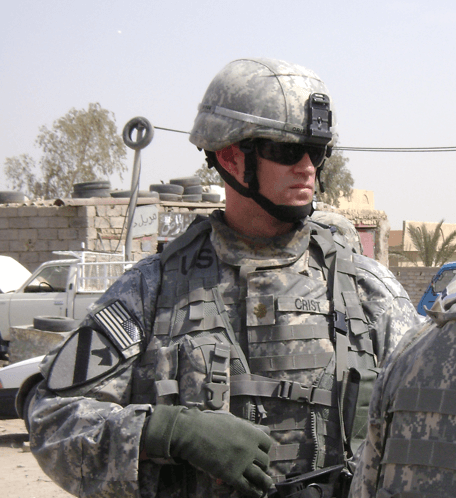
God. Country. Notre Dame. In celebration of Military Appreciation Month, the Experience Notre Dame team connected with Randy Crist, assistant director for risk management and safety, to learn more about his service in the Army, how this experience translates to his role at Notre Dame, and how we can show appreciation to servicemembers, veterans, and their families in the month of May and throughout the year.
This is part 4 of 4 in an interview series honoring Military Appreciation Month. Read part 1 , part 2, and part 3.
What inspired you to join the military?
I did not come from a military family so the military was not something that I grew up thinking much about. During my junior year in high school, my guidance counselor suggested that I consider the military academies. After learning more about them, the opportunity to attend a highly regarded college, have it completely paid for, and graduate with an exciting, challenging job ultimately led me to attending West Point.

Tell us about your time in the military. Which branch did you serve in, how long did you serve, and what was your job?
When I graduated from the Academy, my plan was to fulfil my 5-year commitment then move on to the civilian world. However, I truly enjoyed being in the Army and ended up retiring after a 20-year career as an Armor officer. During that time, I was part of and led a variety of organizations culminating with my last assignment as the head of the Army ROTC unit on campus.
What was your favorite duty station or assignment?
I was fortunate to serve in a number of interesting places, including Colorado, Washington state, Korea, Iraq, and, as a final assignment, here at Notre Dame with the Army ROTC unit. Regardless of location, the best assignments were always the ones where I was with soldiers rather than being a member of a staff.
What are you most proud of as a veteran?
It’s not about any personal accomplishment. I'm most proud of having been part of teams that were focused on service, relied on each other, and shared values to accomplish whatever mission they were assigned.
How did your service prepare you for your transition into your role now as Assistant Director for Risk Management and Safety?
The Army, and military in general, is a people-centered profession, which is similar in many ways to the role of safety. In both, you need to interact with diverse groups of people. Both roles often involve new or undefined challenges that you have to learn to deal with and figure out a solution.
What skills did you learn during your time in the military help you be successful in your current role?
The ability to deal with change and interact with a variety of people are critical components of safety’s role on campus. In Risk Management and Safety, we also, unfortunately, often have to respond in emergency or crisis situations. Having experience in dealing with those types of events in the military makes me more prepared to assess and respond during those moments.
What is your favorite part about working in Risk Management and Safety?
One of the great things about being in Risk Management and Safety is the variety of things we do. We support the entire campus from operations, to athletics, to academic learning and research. Because of this, no two days are the same which keeps work interesting.
May is Military Appreciation Month. What are some ways that people can recognize and show their respect and appreciation for those who are currently serving in our military, veterans, and their families, both in the month of May and throughout the year?
I think most veterans are humble and don’t expect much in return for their service. While each veteran has their own reasons for serving, ultimately, service is an underlying reason. Genuinely acknowledging their service with a thank you is appreciated. I think that it’s also important to realize that service and sacrifice extends beyond the veteran themselves. The military is a demanding profession that often takes the service member away from their family and acknowledging the sacrifice that families make is often as meaningful as thanking the veteran.